
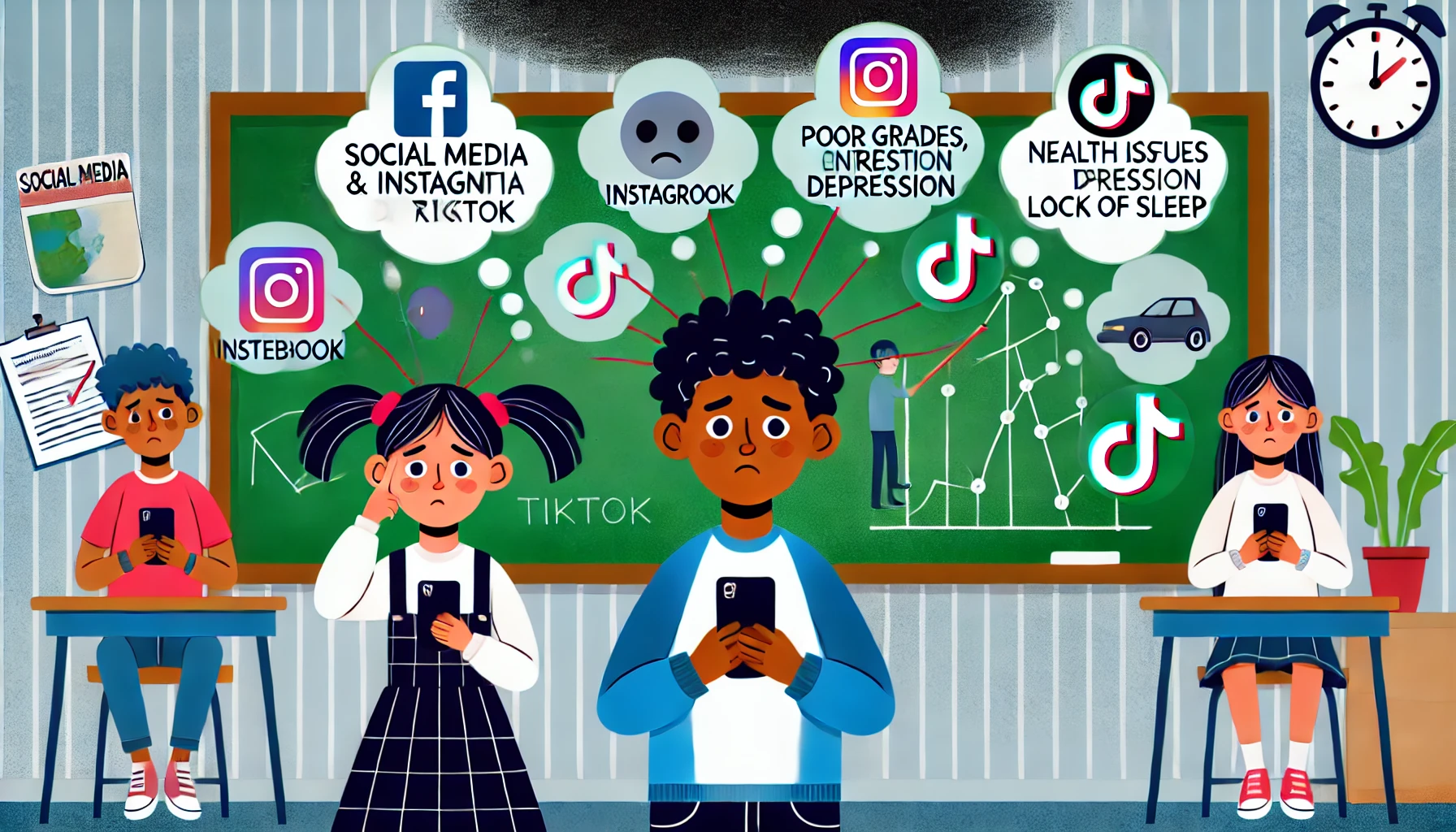
The Effects of Social Media and Smartphone Usage on Children Under 18 in Australia
Hi, everyone. I hope you are all well. Can I briefly point out that it’s now June…how is it halfway through the year already?!? Anyway, down to this week’s topic. I received an enormous amount of feedback from the last blog regarding social media and its related mental health issues. Thanks very much to those who sent me comments. With that in mind, I thought I’d stay on the topic this week; however, I’d focus more on the effects on kids under eighteen. I’ll be honest: the more I look into this topic, the more disturbing I find it. You don’t believe me? As I have been writing this blog, the US surgeon general has suggested putting tobacco-like health warnings on social media apps and pages. That is a huge call from the USSG. One thing I can say with certainty. My son is currently seven., and if I have my way, he won’t be anywhere near social media until he is an adult.
In today’s digital age, the pervasive use of social media and smartphones has become an integral part of daily life. In Australia, the scenario is no different. While these technologies offer significant advantages, they also pose substantial challenges. The growing body of research highlights a concerning correlation between excessive social media and smartphone usage and the rise in anxiety and Attention Deficit Hyperactivity Disorder (ADHD) among young Australians. Furthermore, this trend is detrimentally impacting the development of crucial social skills. This blog delves into these issues, citing experts and institutions to provide a comprehensive understanding.
Click here if you want help today.
The Prevalence of Social Media and Smartphone Usage
In Australia, the use of smartphones and social media platforms is ubiquitous among children and teenagers. According to the Australian Communications and Media Authority (ACMA), 90% of teenagers aged 14-17 own a smartphone, and over 75% of those aged 12-13 are also smartphone users. Social media platforms such as Instagram, Snapchat, and TikTok are immensely popular, with many children spending several hours a day on these sites.
The Link Between Social Media, Smartphone Usage, and Anxiety
The rise in anxiety levels among children and teenagers is alarming. According to Dr. Michael Carr-Gregg, a renowned Australian adolescent psychologist, “the constant connectivity and exposure to social media can lead to heightened anxiety levels among young people.” This is supported by data from the Australian Institute of Health and Welfare (AIHW), which shows a 30% increase in anxiety disorders among children and adolescents over the past decade.
One of the key reasons for this increase is the pressure to maintain an idealized online persona. Social media platforms often showcase carefully curated images and lifestyles, creating unrealistic expectations. This can lead to feelings of inadequacy and low self-esteem, significantly contributing to anxiety. Furthermore, the constant notifications and the fear of missing out (FOMO) perpetuate a cycle of stress and anxiety.
Social Media and ADHD
Attention Deficit Hyperactivity Disorder (ADHD) is another condition that has seen a sharp rise among Australian children and teenagers. Dr. Michael Nagel, an associate professor in education at the University of the Sunshine Coast, points out that “the overuse of technology can contribute to symptoms of ADHD, such as inattention and hyperactivity.” The rapid switching between apps, games, and social media platforms can fragment attention spans, making it difficult for young people to focus on tasks for extended periods.
The Queensland Brain Institute has also conducted studies indicating that excessive screen time can alter the brain’s neural pathways, affecting the development of attention and executive function skills. This neurobiological impact underscores the importance of monitoring and moderating screen time to mitigate the risk of developing ADHD symptoms.
Impact on Social Skills Development
Beyond the psychological and neurobiological effects, excessive use of social media and smartphones is impacting the social skills development of children and teenagers. In the formative years, face-to-face interactions are crucial for learning how to read social cues, develop empathy, and build meaningful relationships. However, the virtual interactions provided by social media lack the depth and richness of real-life conversations. Children who spend a significant amount of time on screens are missing out on critical social experiences. These experiences include non-verbal communication, such as body language and facial expressions, which are essential for developing interpersonal skills. The Australian Psychological Society (APS) also highlights that excessive screen time can lead to social isolation and hinder the ability to form strong, supportive relationships.
Recommendations for Parents and Educators
Given the substantial impact of social media and smartphone usage on children’s mental health and social skills, it is imperative for parents and educators to take proactive steps. Here are some recommendations:
- Set Clear Boundaries: Establishing limits on screen time is essential. The Australian Government Department of Health recommends that children aged 5-17 years should have no more than 2 hours of recreational screen time per day.
- Promote Real-Life Interactions: Encourage children to engage in face-to-face social activities. This can include participating in sports (anyone who has met me will know how much importance I place on kids’ sports), joining clubs, or simply spending time with friends and family without the distraction of screens.
- Educate About Online Behavior: Teaching children about the potential pitfalls of social media and encouraging responsible usage can help mitigate some of the negative effects. This includes understanding the importance of privacy, the impact of cyberbullying, and the unrealistic nature of social media portrayals.
- Model Healthy Habits: Parents and educators should model balanced screen use. Children are more likely to adopt healthy habits if they see adults doing the same.
- Create Tech-Free Zones: Designating certain areas of the home, such as the dining room and bedrooms, as tech-free zones can help ensure that children have time away from screens to relax and engage in other activities.
Conclusion
The impact of social media and smartphone usage on children under 18 in Australia is multifaceted, contributing to rising levels of anxiety and ADHD, while also impeding the development of crucial social skills. As highlighted by experts and supported by research, the need for a balanced approach to technology use is more pressing than ever. By setting boundaries, promoting real-life interactions, and educating children about responsible online behaviour, we can help mitigate these negative effects and support the healthy development of our young people.
Click here if you’d like help today.
References
- Australian Communications and Media Authority (ACMA). “Children’s television viewing and multi-screen behaviour.” Accessed May 31, 2024. https://www.acma.gov.au/childrens-television-viewing-and-multi-screen-behaviour.
- Australian Institute of Health and Welfare (AIHW). “Mental health services—in brief 2019.” Accessed May 31, 2024. https://www.aihw.gov.au/reports/mental-health-services/mental-health-services-in-brief-2019.
- Dr. Michael Carr-Gregg, Adolescent Psychologist. “The impact of social media on young people.” Lecture at the Australian Psychological Society Annual Conference, 2023.
- Dr. Michael Nagel, University of the Sunshine Coast. “Technology and the developing brain.” Published in the Journal of Educational Psychology, 2022.
- Queensland Brain Institute. “Screen time and cognitive development in children.” Research report, 2021.
- Dr. Kristy Goodwin, Digital Wellness Researcher. “Raising Your Child in a Digital World.” Penguin Random House, 2017.
- Australian Psychological Society (APS). “Guidelines for screen time use in children and adolescents.” Accessed May 31, 2024. https://www.psychology.org.au/for-the-public/Psychology-topics/Screen-time.